
There is a particular kind of frustration in reading focus advice when you are the one who cannot focus. You already know about the phone. You have tried the timer. You have made the list. And you still sit down and nothing happens.
That is usually a sign that the advice is aimed at the wrong problem. Techniques help when the machinery is working and needs organising. They do very little when something underneath is broken — and something underneath is broken more often than most articles admit.
So this is not a list of tips. It is a way of finding out what is actually going on with you.
Start here: two questions that narrow it down fast
Question 1: Did it come on suddenly, or creep up on you?
This single question splits the possible causes almost in half, and almost nobody asks it.
Sudden — days or a few weeks, and you can roughly date it — points toward something that changed: a new or adjusted medication, an illness or infection you are still recovering from, a bereavement or acute stress, a thyroid problem, or a sharp drop in sleep quality. Sudden onset deserves medical attention rather than a productivity system.
Gradual — you cannot say when it started, only that it is worse than a few years ago — points toward accumulation: rising workload, a more interrupted environment, chronic short sleep, or a hormonal transition. These rarely have one cause and rarely have one fix.
Question 2: Can you still focus on things you enjoy?
This is the question people are most embarrassed to ask, so let me answer it plainly: yes, you can watch three hours of a series and still have a real focus problem. Those are two different systems.
Watching something you love runs on interest-driven attention. The content does the work — it pulls you along, and staying requires nothing from you. A spreadsheet runs on effortful attention, which you have to generate yourself and hold against boredom, difficulty and the pull of anything easier.
Being able to do the first but not the second is normal and extremely common. It does not make you lazy, and — importantly — it does not rule anything out either. People with ADHD frequently describe exactly this pattern, sometimes to an extreme.
What it does tell you: if you can focus deeply on some things, your attention machinery is intact. That points away from the more worrying medical causes and toward motivation, task design, stress or environment — which is genuinely good news.
What people actually blame — and what that misses
A national survey of 1,008 US adults commissioned by the Ohio State University Wexner Medical Center, conducted in May 2025, asked what people believe is shortening their attention. The ranking is useful, partly because of what sits at the top.
| What people blame | Share who named it |
|---|---|
| Stress and anxiety | 43% |
| Lack of sleep | 39% |
| Digital devices | 35% |
| Boredom or lack of interest | 31% |
| Multitasking | 23% |
| Lack of physical activity | 21% |
| Poor diet or hydration | 20% |
| Medical conditions such as ADHD | 18% |
Swipe sideways to see the whole table.
Two things stand out. First, phones come third, not first — behind stress and sleep, which get a fraction of the attention in most articles. Second, only 25% of those surveyed said they had no trouble with their attention span at all. Whatever is happening to you is happening to most people around you.
The survey measures what people believe, not what is proven — but as a map of where to look first, it is a good one.
The 9 causes, and how to tell if it's yours
1. Stress and anxiety
Anxiety is not a mood sitting quietly beside your work. It occupies the same mental workspace you need for the task, running background threat-checking that leaves less capacity for anything else. This is why anxious focus failure feels different from tired focus failure: you are not blank, you are busy with the wrong thing.
2. Sleep debt and poor sleep quality
Sleep is the one cause that makes every other cause worse, and the one people most reliably underestimate. Note that quantity is not the whole story — you can spend eight hours in bed and still be badly under-rested if the sleep is fragmented. Untreated sleep apnoea is a common and very treatable culprit here.
3. Your digital environment
Not because notifications have rewired your brain — see the next section, where the evidence is thinner than you have been told — but because every switch has a re-entry cost, and a working day now contains an enormous number of switches. It is a volume problem, not a damage problem.
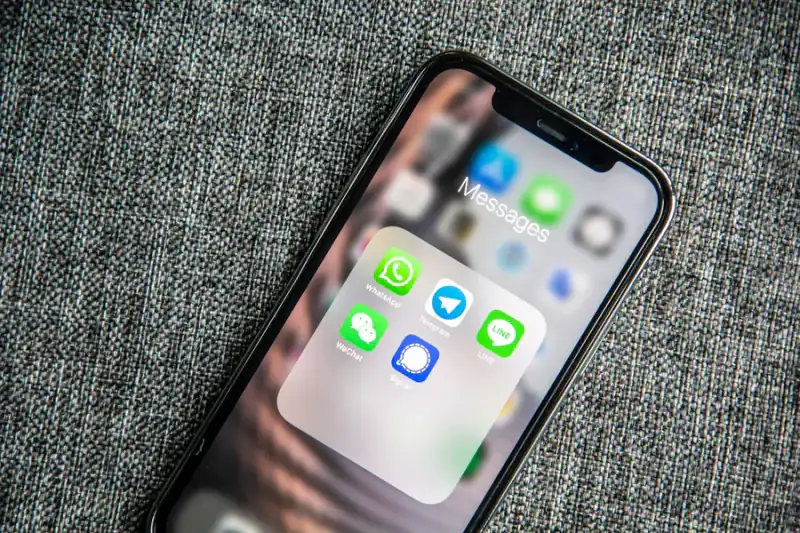
The cost is not mystical. It is that you leave the task, and coming back takes longer than leaving did.
4. Boredom and task mismatch
Sometimes the honest answer is that the task is dull, or vague, or you cannot see why it matters. Attention is partly a motivational system, and it withdraws from work with no visible point. This is worth ruling out before treating a meaning problem as a medical one.
5. Chronic multitasking
You are not doing two things at once; you are switching rapidly and paying a toll each time. Do that all day and the felt result is a mind that will not settle even when you finally give it one thing.
6. Movement, food and hydration
A sedentary day and an erratic eating pattern both show up as afternoon fog. These are real but modest levers, and they are covered properly in our guide to the nine real causes of brain fog, along with the nutrient deficiencies — B12, iron, vitamin D — that belong in the same conversation.
7. Medication side effects
An underrated cause with a very clear signature. Antihistamines, some blood pressure medications, sleep aids, certain antidepressants and anti-anxiety medications can all blunt concentration. If your focus problem has a start date near a prescription change, that is not a coincidence to dismiss.
8. Hormonal change
Perimenopause and menopause are a genuinely common cause of new concentration and word-finding difficulty in women in their forties and fifties, and one that is frequently missed or misattributed to stress. It is well enough described in the clinical literature to belong on any honest list, and it is a reason to see a doctor rather than to buy anything.
9. An underlying medical condition
Thyroid disease, anaemia, depression, post-viral illness including long COVID, diabetes and ADHD all present as "I can't concentrate". They are not exotic and several are diagnosed with a routine blood test. If the everyday explanations do not fit, this is the door to knock on — not the twelfth productivity app.
The phone myth: what the research actually shows
You have almost certainly read that phones have destroyed your attention span. It is the most repeated claim in this entire subject, and it is much shakier than its confidence suggests.
The "brain drain" study. In 2017, Ward, Duke, Gneezy and Bos reported that merely having your own phone nearby reduced available cognitive capacity. It was widely covered. A 2022 replication published in Acta Psychologica, using the same tasks and conditions, did not reproduce the finding, and later analysis has questioned the size of the effect.
The media-multitasking study. A 2009 study reporting that heavy media multitaskers performed worse on attention tasks became the basis for a decade of headlines. A later meta-analysis by Wiradhany and Nieuwenstein found the association was, at best, very small.
The "you can only focus for 10–15 minutes" claim. Frequently stated, widely taught, and — when Bradbury went looking for the underlying research in 2016 — not supported by evidence.
None of this means your phone is harmless. It means the honest version is more modest: the phone is a very effective competing option, and every time you take it, returning costs you. That is a behaviour and environment problem, and you can fix it by moving the phone to another room. You do not need a disputed claim about brain damage to justify a decision that obvious.
Why this matters for you specifically: if you have been blaming your phone and moving it has not helped, that is useful information. It means your cause is somewhere else on the list — most likely stress or sleep, the two that outrank phones in the survey above.
Where focus audio fits — and where it doesn't
Background sound belongs in the environment category: a small adjustment that helps some people settle into a task. It does not treat sleep debt, a thyroid problem, depression or ADHD, and anything marketed as if it does deserves suspicion. If you have seen The Genius Song advertised and want the claims, the pricing and the refund terms examined honestly, we went through them in detail — an editorial analysis, not a personal test.
Read the honest review →A five-question self-check
Answer these before you change anything. The point is not to score yourself — it is to notice which answer you hesitated on.
- Can I date the start of this? If yes, look hard at what else changed that month — medication, illness, job, sleep, a life event. If no, you are looking at accumulation, not an event.
- Does it follow me everywhere? If focus returns in a different room, on holiday or on tasks you chose, the cause is more likely situational. If it is identical everywhere, look at sleep and health.
- How am I actually sleeping? Not hours in bed — how you feel at 3pm, and whether anyone has mentioned snoring or gasping.
- What is my mind doing when it wanders? Blank and heavy points one way. Racing, rehearsing, worrying points squarely at stress and anxiety.
- Is there anything on this page I recognised and would rather not have? That reaction is usually the most reliable diagnostic in the list.
Once you know which cause is likely yours, the fixes live elsewhere: our full guide to improving focus for habits and environment, and how to focus while studying if the problem is specifically study sessions.
Is it ADHD, or is it your life?
This question has become much louder recently, and much harder to answer well. A 2024 survey by the Ohio State University Wexner Medical Center found that around a quarter of American adults suspect they have undiagnosed ADHD — a striking number, and one that says as much about how the topic is discussed online as about the condition itself.
That discussion is not reliable. Research published in 2025 examining popular ADHD content on TikTok found that a large share of the most-viewed claims did not align with clinical guidance. Short videos are built for recognition, not diagnosis, and almost everyone recognises themselves in a list of attention symptoms — because those symptoms are also what stress, poor sleep and burnout look like.
The distinction clinicians actually use is history and breadth. ADHD is developmental: the pattern typically shows up across childhood and adulthood, in school, work and relationships — not only in the two years since your workload doubled. Difficulty that is recent and confined to one area of life has a different set of likely explanations.
That is a starting point for a conversation, not a conclusion. Assessment belongs with a qualified professional, and there is no honest version of this article in which a website settles it for you.
When to see a doctor
Seek urgent medical help
- Sudden confusion, or trouble understanding what people are saying
- A severe headache that comes on suddenly, unlike your usual headaches
- Weakness or numbness on one side of the face, arm or leg
- Sudden difficulty speaking, or slurred speech
- Sudden vision loss or double vision
Those can be signs of a stroke or another emergency, and they need immediate attention rather than a search.
Book an appointment if your concentration problem: started shortly after beginning, stopping or changing a medication; came on after a head injury; arrived with loud snoring, gasping or witnessed pauses in breathing during sleep; comes with unexplained weight change, temperature intolerance, hair loss or a racing heart; comes with persistent low mood, hopelessness or loss of interest; or has been getting steadily worse over months despite decent sleep.
Most causes of poor concentration are ordinary and fixable. But "ordinary" is a conclusion to reach after checking, not before.
Frequently asked questions
Why can I watch TV for hours but not focus on work for ten minutes?
Because they are not the same kind of attention. Watching something you enjoy runs on interest — the content pulls you along and staying requires nothing. Work runs on effortful attention, which you generate and sustain yourself against boredom and difficulty. Being able to do the first but not the second is extremely common and does not mean you are lazy. It also does not rule anything out, since people with ADHD often report the same pattern.
Why can't I focus all of a sudden?
Sudden onset points to a different set of causes than gradual decline. It is more often linked to a new or changed medication, an illness or infection, acute stress or grief, a thyroid problem, or disrupted sleep. If yours appeared suddenly and has not lifted, that is worth a conversation with a doctor.
Has my attention span actually got shorter?
There is no good evidence that human attention capacity has shrunk. The famous claim that it fell to eight seconds, less than a goldfish, traces back to a marketing report with no traceable source. What research does show is that we switch between screens far more often than we used to — a change in behaviour and environment, not proof that your brain has degraded.
Is it ADHD or just stress and modern life?
The useful distinction is history and breadth. ADHD is developmental, so the pattern usually shows up across childhood, school, work and relationships — not only in the last two stressful years. Difficulty that started recently and is confined to one area of life is more likely stress, sleep, burnout or workload. Neither can be settled by an online quiz or a social video; only a qualified professional can assess it properly.
Does my phone really destroy my attention span?
The evidence is weaker than the headlines suggest. The well-known 2017 study by Ward and colleagues found that a nearby phone reduced available cognitive capacity, but a 2022 replication in Acta Psychologica did not reproduce it. What is not in dispute is simpler: if the phone is within reach you will pick it up, and every switch costs time and momentum. That is reason enough to move it.
Can't focus and can't remember things — should I worry?
Poor concentration and forgetfulness travel together and usually share the same everyday causes: too little sleep, high stress, or doing several things at once so nothing is encoded properly. It becomes worth investigating if it is getting steadily worse, if other people have noticed, if you are getting lost in familiar places, or if it began after a head injury, a new medication or an illness.
Why can I focus at home but not at work, or the other way round?
If focus changes with location, the cause is far more likely environmental or motivational than medical. Look at interruption frequency, noise, whether the task is clearly defined, and whether you care about the outcome. A medical cause tends to follow you everywhere rather than switching off when you change rooms.
How long should I put up with it before seeing a doctor?
If concentration problems have lasted more than a few weeks despite decent sleep and lower stress, are getting worse, or are affecting your work or relationships, book an appointment. Go sooner if there is persistent low mood, loud snoring or gasping in your sleep, unexplained weight or temperature changes, or if it began after a new medication or a head injury.
The bottom line
"Why can't I focus anymore" is rarely one question. For some people the answer is four hours of real sleep debt. For others it is anxiety wearing the costume of distraction, or a medication nobody connected to it, or a thyroid reading nobody has taken.
The reason generic focus advice fails so often is that it assumes everyone has the same problem. Work out which cause is yours first. The fixes are much easier once you are aiming at the right thing.